Wooden boards
Before foam, before fibreglass.
Hawaiian surfboards were cut from a single piece of wood and carried down the beach on a shoulder. These are the shapes Duke Kahanamoku grew up on. Three of them carry his name, and no two are the same.
What they are
Before foam, before fibreglass
Surfing is heʻe nalu. It is Native Hawaiian and centuries older than Duke Kahanamoku. Long before foam, before fibreglass and before the leash, a Hawaiian surfboard was cut from a single piece of wood and carried down the beach on a shoulder.
Duke Paoa Kahinu Mokoe Hulikohola Kahanamoku was born on 24 August 1890 at Haleʻākala in Honolulu, in what was then the Kingdom of Hawaiʻi. He grew up on shapes like these, and he carried surfing from Waikīkī to the world.
On 24 December 1914 at Freshwater Beach in Sydney he shaped a board from local sugar pine and paddled out on it. Australia dates its surfing to that afternoon.
The three
The three boards
Our own photographs, taken outdoors with each board standing on its tail. Nothing has been added to them.
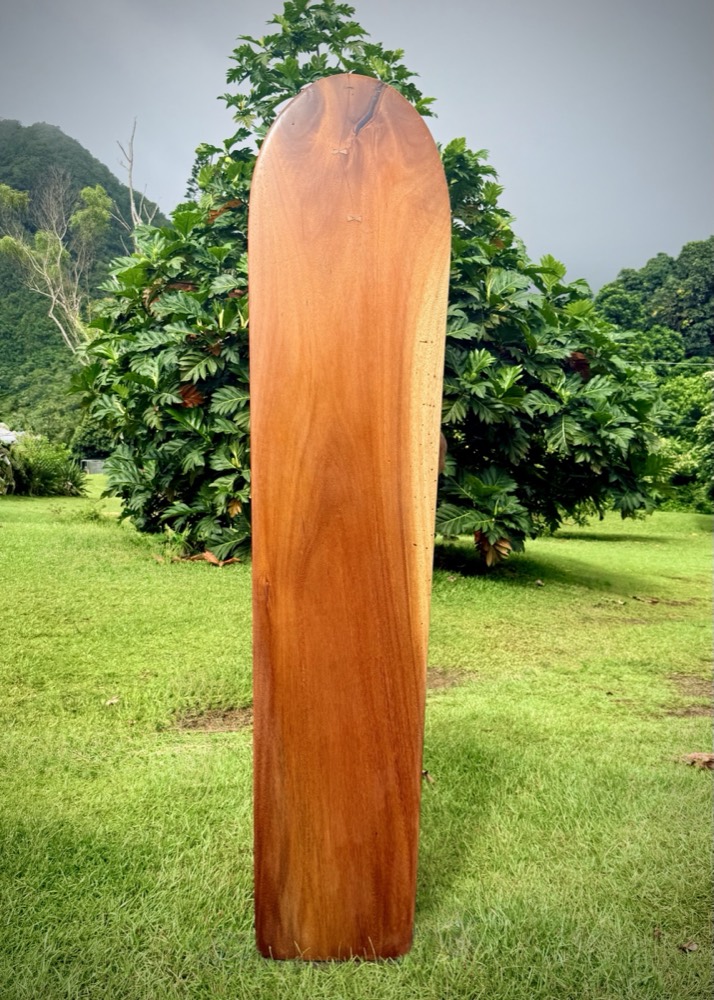
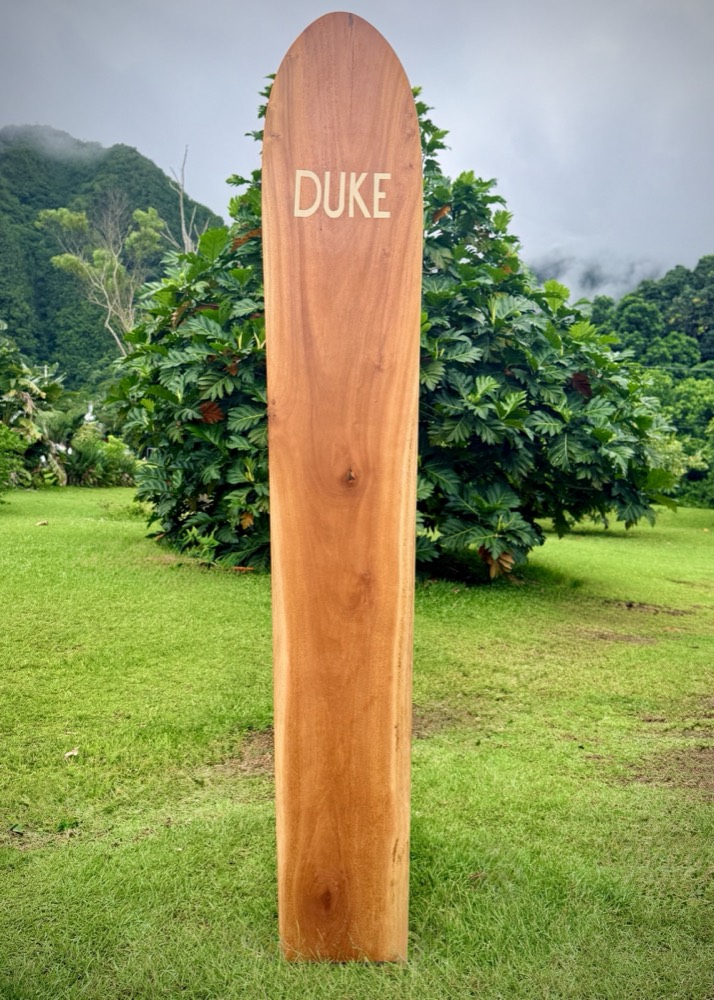
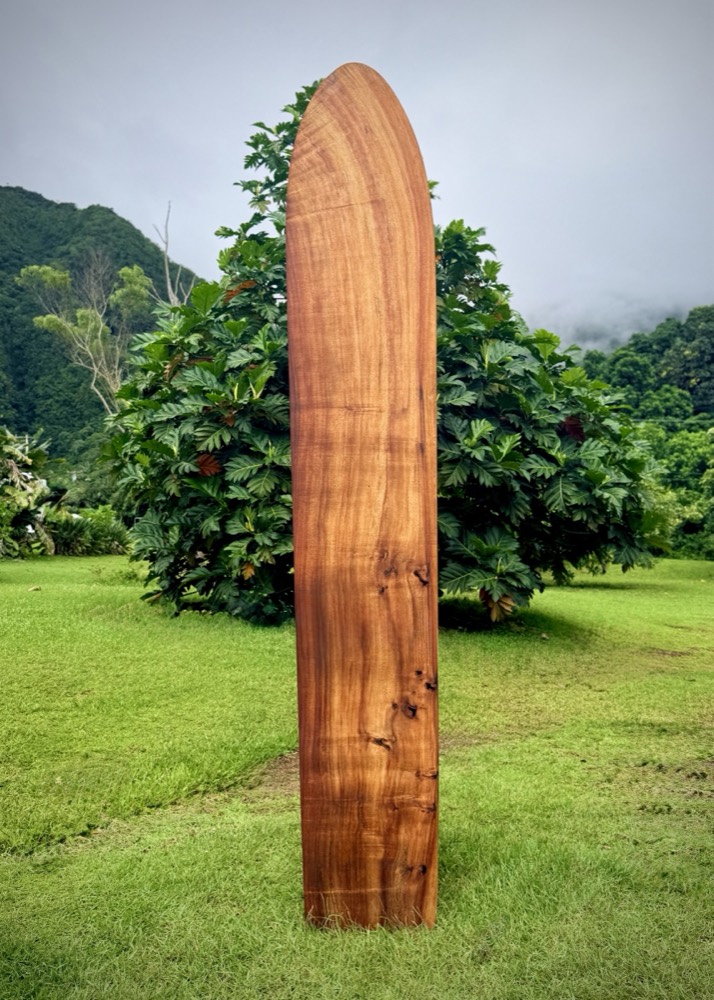
We hold a written record that describes three boards, with the wood, the length, the width, the thickness and the weight of each. It does not say which description belongs to which photograph. Until somebody stands in front of them with a tape measure, this page prints no dimensions and names no wood. A number we cannot attach to an object is worse than no number.
Plainly
What these are not
They are display pieces. They stand in a room and they are looked at. They are not surf equipment, they are not offered as surf equipment, and nobody should put one in the water.
Nothing on this page is for sale. There is no price here, no basket and no checkout, and this site takes no payment and collects no personal information.
To see them, the room is the gallery at the Moana Surfrider, 2365 Kalākaua Avenue in Waikīkī.
Elsewhere
The goods that carry his name
The hats and goods that carry Duke Kahanamoku’s name are a separate thing from the boards, and they are shipped from Honolulu.